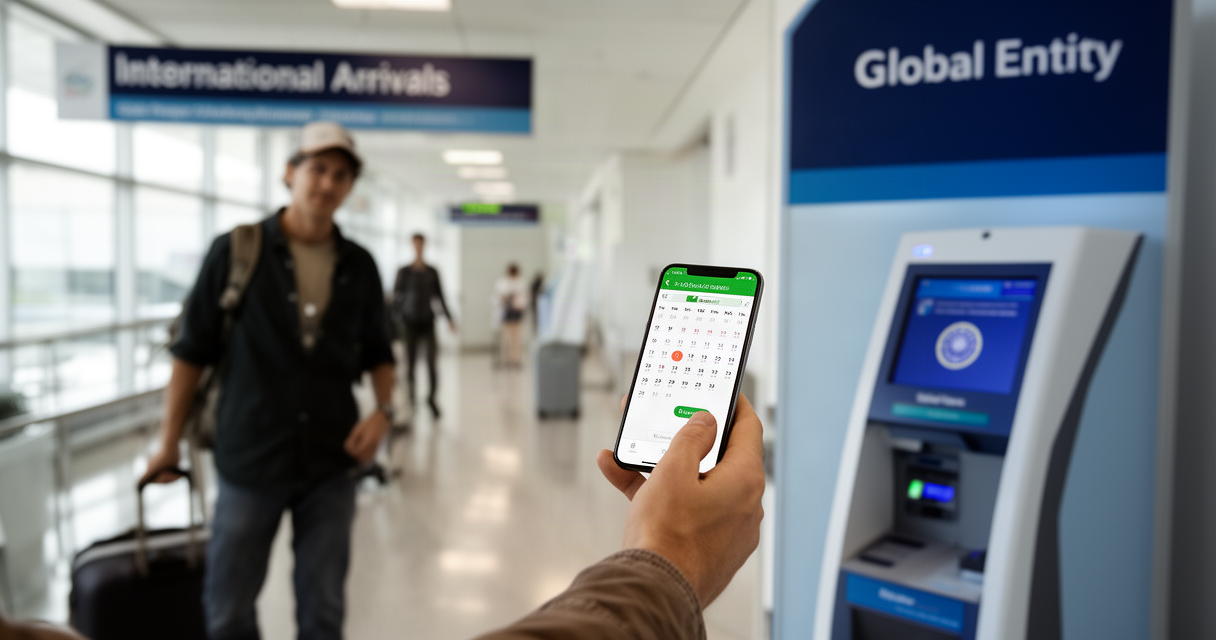
Conditionally approved, no available slots at any nearby enrollment center for months — that’s not a glitch in the CBP scheduler. It’s the actual backlog. Applicants checking ttp.cbp.dhs.gov and finding every Global Entry interview center booked solid into next year aren’t doing anything wrong; the queue is genuinely that long in most major metros.
If a trip is coming up and the interview is the last item standing between a conditional approval and Global Entry membership, the pressure is real. Search “Appointment Scanner alternatives for Global Entry” and half a dozen apps show up, each charging $10 to $30 to watch the same government website faster than a human can refresh a browser tab.
The quick version: none of these tools are AI, none are affiliated with CBP, and none book the appointment for an applicant — they just refresh the public scheduler and send an alert when a slot opens. Appointment Scanner and Global Entry Spotter have the strongest track record on r/GlobalEntry. FindGlobalEntry and GlobalEntry Appointment Finder are cheaper one-time options. TTP Interview Finder covers the most programs but has the most inconsistent reviews. And before paying anyone, it’s worth checking whether CBP’s free Enrollment on Arrival program solves the problem for free. This sits alongside the broader pre-travel entry stack — visa and entry-requirement checkers solve a related but separate problem: knowing what a destination requires before departure, not when a US interview slot opens.
How These Appointment Scanner Alternatives for Global Entry Actually Work
Every one of these tools does the same mechanical job. They poll CBP’s public Trusted Traveler Program scheduler at ttp.cbp.dhs.gov on a repeating interval, watch for a newly canceled or released appointment slot, and fire a text or email the moment one appears.
None of them integrate with CBP systems. None of them have special access to appointment inventory. They are reading the same public calendar every applicant can check manually — just faster, and around the clock instead of during business hours.
That distinction matters because these tools do not book anything. The alert buys a window, typically a few minutes before someone else grabs the same slot, and the applicant still has to log into the official TTP site, enter their own credentials, and claim it themselves. Marketing copy that calls this “AI-powered” is overstating what’s happening. Watching a webpage for a change and sending a notification is a solved, mechanical task — useful, but not intelligence. On r/GlobalEntry, one applicant using Appointment Scanner described the pattern bluntly: four alerts landed in five hours, and the slot that finally worked was gone within three minutes of the notification.
The underlying tech also isn’t exotic — it’s the same category of watch-and-notify logic behind the flight-tracking tools frequent flyers already use to catch gate changes and delays before an airline announces them. Same audience, same instinct: automate the checking, not the decision.
Appointment Scanner Alternatives for Global Entry, Compared
Pricing structures, refund terms, and alert behavior vary enough between these five tools that “which one is cheapest” and “which one actually works for a specific center” are different questions.
| Tool | Price / structure | Refund policy | Alert method & speed | Center coverage (vendor-claimed) | NEXUS/SENTRI/renewal support |
|---|---|---|---|---|---|
| Appointment Scanner | $29 one-time, active 1 month | 30-day, 100% money-back | Text and/or email, up to 25 alerts/day | Nationwide, per vendor’s page | Yes — Global Entry, SENTRI, NEXUS |
| FindGlobalEntry | $24.99 one-time, active 30 days | Case-by-case; explicitly NOT refunded solely because an earlier slot wasn’t released | Email/text, exact cadence not detailed | Vendor claims broad coverage; center count and the “94% find a slot” figure are unverified and conflict across the site | Focused on Global Entry |
| Global Entry Spotter | $25 one-time | 100% money-back guarantee | SMS confirmed; some listings also mention email — confirm the method at signup | Up to 3 centers monitored per account | Global Entry-focused |
| TTP Interview Finder | Free Basic tier; paid Premium (exact price not confirmed — check in-app) | Not specified for Premium | Requires account/login.gov-style sign-in | Broadest program list of the five | Yes — Global Entry, SENTRI, NEXUS, FAST Canada, FAST Mexico |
| GlobalEntry Appointment Finder | $9.99 one-time (cheapest) | 30-day, no-questions-asked refund | Claimed 10-20 alerts/day | Global Entry-focused | Global Entry only |
A naming warning before comparing further: several near-identical app names are floating around app stores and search results — plus CBP-adjacent tools that sound official but aren’t. Checking the actual developer name before paying is worth the extra minute; it’s easy to land on the wrong app entirely.
Two patterns stand out from the pricing structures alone. A one-time fee that doesn’t expire until claimed beats a subscription model when the wait could run months — nobody wants to be charged again mid-search. And unlimited-duration alerts, like Global Entry Spotter’s “runs until you book or opt out,” beat a hard 30-day cutoff for badly backlogged centers, where a month isn’t enough runway to see a slot open.
The Tools, One by One
Appointment Scanner
Appointment Scanner has the deepest Reddit footprint of the five, with the most recurring mentions on r/GlobalEntry going back multiple enrollment cycles. At $29 one-time for a month of monitoring, up to 25 alerts a day by text or email, and a 30-day money-back guarantee, the terms are straightforward. It covers Global Entry, SENTRI, and NEXUS in one product, which makes it the simplest single pick for applicants juggling more than one program.
FindGlobalEntry
FindGlobalEntry is the more established of the two mid-priced options at $24.99 one-time for 30 days. The refund policy has a specific carve-out worth reading before purchase: it’s case-by-case, and explicitly does not cover the scenario where CBP simply never released an earlier slot during the coverage window. The site’s “94% find a slot” claim, along with its center-count figures, is vendor-supplied marketing with no published methodology — and the numbers aren’t consistent across its own pages, so treat it as a claim, not a stat.
Global Entry Spotter
Global Entry Spotter’s structure is the outlier: $25 one-time, but alerts keep running indefinitely until the applicant books or opts out — and opting back in later is free. That open-ended window makes it the strongest fit for centers with the worst backlogs, where a 30-day cap simply isn’t enough time. One r/GlobalEntry post summed up a fast result: paid $25, saw 12 openings by the following Monday, called it worth it. Another was more guarded going in — “super skeptical but it worked” — which tracks with a tool whose real performance depends heavily on how backlogged the specific center is. One inconsistency to flag: some listings describe the alerts as SMS-only, others mention email as well. Confirming the method at signup avoids a surprise.
TTP Interview Finder
TTP Interview Finder covers more ground than any competitor on this list — Global Entry, SENTRI, NEXUS, plus FAST for both Canada and Mexico — through a free Basic tier and a paid Premium tier whose exact price isn’t consistently published (check the current rate in-app before assuming). Reliability is the split. One App Store reviewer paid for Premium and reported zero alerts, calling it a waste. Another had the opposite experience, finding a SENTRI slot in three days after being quoted a nine-month wait elsewhere. The tool requires creating an account to use, and that sign-in flow drew at least one App Store review calling it “phishy” — a flag worth taking seriously given what’s at stake (more on that below).
GlobalEntry Appointment Finder
GlobalEntry Appointment Finder, at globalentryappointments.com, is the cheapest of the five at $9.99 one-time, with a 30-day no-questions refund and a claimed 10-20 alerts per day. It’s Global Entry-focused rather than multi-program. It also has the thinnest public discussion of the group — fewer Reddit and App Store threads to independently verify the vendor’s claims against, which is worth factoring in alongside the low price.
Does Paying for One Actually Work — And Is It Safe To?
Results across all five tools track one variable more than any other: how backlogged the specific enrollment center is. A tool watching a center with routine cancellations will surface alerts fast; the same tool watching a chronically overbooked center may deliver nothing for weeks. None of this is magic, and none of it is guaranteed — every vendor is selling a faster refresh rate, not a promise.
The real safety question isn’t whether these apps are scams broadly — it’s a narrower, checkable one: does the app ask for TTP or login.gov credentials before those credentials are actually needed on the official site? TTP Interview Finder’s account-required sign-in flow is the one on this list that drew a “phishy” complaint in an App Store review, and that’s worth a second look before entering login.gov details anywhere but the official domain.
Separately, there’s no verifiable public report of CBP rate-limiting or blocking any of these polling bots — that’s an open question, not a confirmed safety guarantee either way. And none of the five claim to guarantee approval; all they promise is a faster alert on a public calendar. Paying $25-30 for a faster refresh is, functionally, paying a service to do something you could do yourself — the same tradeoff air-passenger-rights services make when they file a claim a traveler could file directly. The value is entirely in not having to babysit the tab.
The Free Alternative CBP Doesn’t Advertise: Enrollment on Arrival
Before paying for any of the five tools above, it’s worth checking Enrollment on Arrival first — CBP’s own program, and it’s free.
EoA lets a conditionally-approved applicant skip the scheduled interview entirely and complete it instead at a participating port of entry, on the next international arrival, no appointment needed. There’s no additional fee beyond the original $120 Global Entry application fee, confirmed directly on CBP’s own program pages. CBP has expanded the program from an original 5 airports to more than 16 international airports, plus a number of land-border crossings.
One r/GlobalEntry post described the process at JFK Terminal 4: about a three-minute wait, approved the same day, no scheduled slot ever booked.
The limits matter as much as the benefit. EoA is not available 24/7 — hours are set per airport and are tied to international arrival flight schedules, not a fixed daily window. A delayed inbound flight can blow the cutoff entirely; one r/GlobalEntry user reported missing Charlotte’s EoA cutoff by five minutes because their flight landed late. And EoA’s applicability to renewal applicants is documented far less consistently than for first-time applicants — many renewals are approved through a risk assessment with no interview required at all, and a separate remote-interview pilot handles some renewal cases outside the standard EoA framework. Renewal applicants shouldn’t assume EoA applies the same way; checking the individual TTP dashboard for the specific instructions attached to that application is the reliable way to confirm.
Who Should Actually Pay For One of These Apps (and Who Shouldn’t)
Paying makes sense when there’s no international arrival scheduled before Global Entry membership is needed, the local center’s backlog runs six months or longer, and $25-30 is worth it to avoid manually refreshing a scheduler for weeks. Skipping the paid tools makes sense when an international trip with a real layover or connection window is already on the calendar — Enrollment on Arrival solves the same problem for free — or when checking the scheduler can simply be folded into an existing daily routine without much friction.
For applicants who decide to pay, the choice comes down to the specific constraint. Global Entry Spotter fits a badly backlogged center, since the alerts don’t expire on a fixed calendar. Appointment Scanner is the most Reddit-tested option and the simplest single pick for multi-program coverage. TTP Interview Finder is worth considering only if SENTRI, NEXUS, or FAST access is needed alongside Global Entry, and only with the login flow in mind.
One thing not worth doing: paying for two of these at once. Every tool on this list is watching the exact same public scheduler — running two in parallel doubles the cost without doubling the odds. For a broader view of the category, other border and immigration-tracking apps cover adjacent problems, like tracking Schengen days or residency status, that a Global Entry appointment finder doesn’t touch.
Frequently Asked Questions
Are Global Entry appointment finder apps legit, or a scam?
The functional ones are legitimate in that they do exactly what they claim — poll a public scheduler and send alerts. None are CBP-affiliated, and every vendor states that clearly on their own site. The safety question isn’t legitimacy broadly; it’s whether a specific app asks for TTP or login.gov credentials before they’re actually needed.
Should someone pay for more than one of these apps at once?
No. All five watch the same public CBP scheduler, so running two in parallel doesn’t improve the odds of an earlier alert — it just doubles the cost.
What is Enrollment on Arrival, and is it really free?
EoA lets a conditionally-approved applicant complete their interview at a participating port of entry on their next international arrival, with no appointment and no fee beyond the original $120 application. It’s confirmed on CBP’s own pages, but hours vary by airport and are tied to arrival schedules — not available around the clock.
Do these apps work for NEXUS and SENTRI too, not just Global Entry?
Some do. Appointment Scanner and TTP Interview Finder both cover NEXUS and SENTRI in addition to Global Entry; TTP Interview Finder adds FAST Canada and FAST Mexico. FindGlobalEntry and GlobalEntry Appointment Finder are Global Entry-focused.
Does a Global Entry renewal require an interview at all?
Not always. Many renewal applications are approved through a risk-based review with no interview required, and some renewal cases are routed to a separate remote-interview process instead of a scheduled or walk-in interview. Checking the specific TTP dashboard is the only reliable way to know which path applies to a given renewal.
Can any of these apps book the appointment automatically?
No. Every one of the five only sends an alert. The applicant still has to log into the official TTP scheduler themselves and claim the slot, typically within a few minutes of the notification before someone else takes it.
The Bottom Line
These five apps are simple polling bots doing one boring, useful job — watching a government website faster than a human can. They are not AI assistants, and none of them guarantee an outcome. Which one is worth paying for depends on how backlogged the local center is, whether an international trip is already scheduled, and which programs need coverage beyond Global Entry.
The first move should be checking upcoming international travel dates against Enrollment on Arrival’s airport list — it solves the same problem for free, if the trip lines up. If it doesn’t, picking exactly one paid tool that matches the actual bottleneck — backlog length, program coverage, or price — beats running two at once or defaulting to whichever app ranks highest in search results.
The scheduler doesn’t care how much you paid for the alert — it only cares who clicks fastest, and now you know exactly what you’re paying for when you hire something else to do that clicking for you.