A flight lands four hours late. The airline blames “operational issues.” An email from AirHelp shows up within the hour, promising compensation with zero effort — just sign over 35% of whatever gets recovered.
The math on that trade is rarely explained clearly, and it should be. Under EU261 or UK261, a delayed or cancelled flight can be worth €250 to £520 in cash compensation, decided entirely by distance and delay length — not by how the airline framed the excuse. Filing directly with the airline costs nothing and keeps 100% of that payout. Filing through AirHelp costs 35% of it, and 50% if the airline pushes back hard enough that legal action gets involved.
The short answer: DIY wins for straightforward, well-documented delays. AirHelp earns its cut mainly when a claim has already been denied once, involves a messy multi-leg or denied-boarding dispute, or when the traveler genuinely won’t follow up otherwise. The rest is arithmetic, and it favors doing it directly.
What Travelers Are Actually Owed Under EU261/UK261
EU261 (Regulation EC 261/2004, Article 7) sets fixed compensation tiers by flight distance, triggered by a delay of three or more hours at arrival, a cancellation, or denied boarding:
| Flight Distance | EU261 Compensation |
|---|---|
| Up to 1,500km | €250 |
| 1,500km–3,500km | €400 |
| Over 3,500km | €600 (full rate) |
The long-haul tier has a wrinkle claims companies rarely spell out in their marketing. On flights over 3,500km, a delay of 3 to 4 hours only pays 50% — €300, not €600. The full €600 requires an arrival delay of 4 hours or more. A transatlantic flight that lands 3 hours and 20 minutes late is worth half what the headline number implies.
Post-Brexit, the UK runs its own version — UK261 — which is legally separate from EU261. Different jurisdiction, different currency, different enforcement body (the UK Civil Aviation Authority, not an EU national authority). The tiers:
| Flight Distance | UK261 Compensation |
|---|---|
| Under 1,500km | £220 |
| 1,500km–3,500km | £350 |
| Over 3,500km, 3–4hr delay | £260 |
| Over 3,500km, 4hr+ delay | £520 |
Separate from cash compensation, both regulations require the airline to provide “care and assistance” — meals, communication access, and hotel accommodation if an overnight stay is needed — once a delay passes roughly two hours. That obligation applies regardless of what caused the delay, and it does not offset or replace the cash payout.
Claims-industry marketing tends to blur the distance-and-delay interaction, presenting every eligible case as a shot at the maximum tier. In reality, the exact delay length at arrival — not just “was it late” — decides whether a long-haul claim is worth €300 or €600, and getting that number right matters before anyone signs away a third of it.
The Extraordinary Circumstances Trap
Airlines have one reliable way to deny a claim: calling the disruption an “extraordinary circumstance.” Weather, air traffic control strikes not caused by the airline, and security threats are all legitimate exemptions under EU261 and UK261. If the delay traces to one of those, no compensation is owed — only the care and assistance obligation stands.
Technical and mechanical faults are a different story, and this is where the regulation gets misused. The European Court of Justice settled the question in Wallentin-Hermann v Alitalia (C-549/07): a technical problem is, in the court’s words, “inherent in the normal exercise of the activity of the air carrier” — meaning routine mechanical failure does not count as extraordinary. The exemption only applies if the airline can show the fault stemmed from something outside normal operations, such as a manufacturer-flagged hidden defect discovered during scheduled maintenance.
In practice, airlines frequently cite “technical issue” as a blanket denial reason anyway, betting that most passengers won’t push back. Reddit’s r/Flights community flags exactly this pattern: one traveler working through a claim noted that a claims company flagging a flight as “eligible” doesn’t settle the question, since “just because Airhelp said your flight was eligible that doesn’t mean that the delay may have been caused by factors outside of the airlines control” [2]. The reverse is just as true — an airline calling something a technical issue doesn’t make it extraordinary. That distinction is the single strongest lever a traveler has when an airline denies a claim on technical grounds, and it costs nothing to invoke directly.
AirHelp’s Actual Fees
AirHelp operates on a no-win-no-fee model: nothing is owed if the claim fails. When it succeeds, the standard commission is 35% of the compensation recovered. If the airline refuses to pay and the case escalates to legal action, that jumps to 50% total. VAT may apply on top of the fee in some countries, cutting the traveler’s net further [1].
Run the numbers on each EU261 tier at the standard 35% rate:
| Compensation Tier | AirHelp Keeps (35%) | Traveler Keeps | If Litigated (50%) | Traveler Keeps |
|---|---|---|---|---|
| €250 | €87.50 | €162.50 | €125 | €125 |
| €400 | €140 | €260 | €200 | €200 |
| €600 | €210 | €390 | €300 | €300 |
On a €400 claim — the most common tier for medium-haul EU flights — a traveler keeps €260 through AirHelp at the standard rate, or exactly €200 if the airline fights it into legal territory. Filing directly keeps the full €400 either way, minus whatever time the process takes.
AirHelp+ is worth separating out clearly, because it gets conflated with the standard service constantly. AirHelp+ is a paid subscription — roughly $99.99 a year, covering nine trips — that waives the success fee entirely on claims filed through it. It is not a discount tier of the free service; it’s a separate product travelers pay for upfront in exchange for keeping 100% of any future payout. For someone who flies often enough to expect multiple disruptions a year, that math can work. For a one-off delayed flight, paying an annual subscription to avoid a single 35% cut defeats the purpose.
The fee structure isn’t hidden — it’s disclosed on AirHelp’s price list — but the framing in marketing emails rarely leads with “this will cost you a third of your payout.” It should.
Filing a Claim Directly
The direct-filing process has four steps, and none of them require legal expertise:
- Confirm eligibility. Check the flight distance, the length of the delay at arrival (not departure), and whether the airline’s stated reason for the disruption is genuinely extraordinary or just labeled that way.
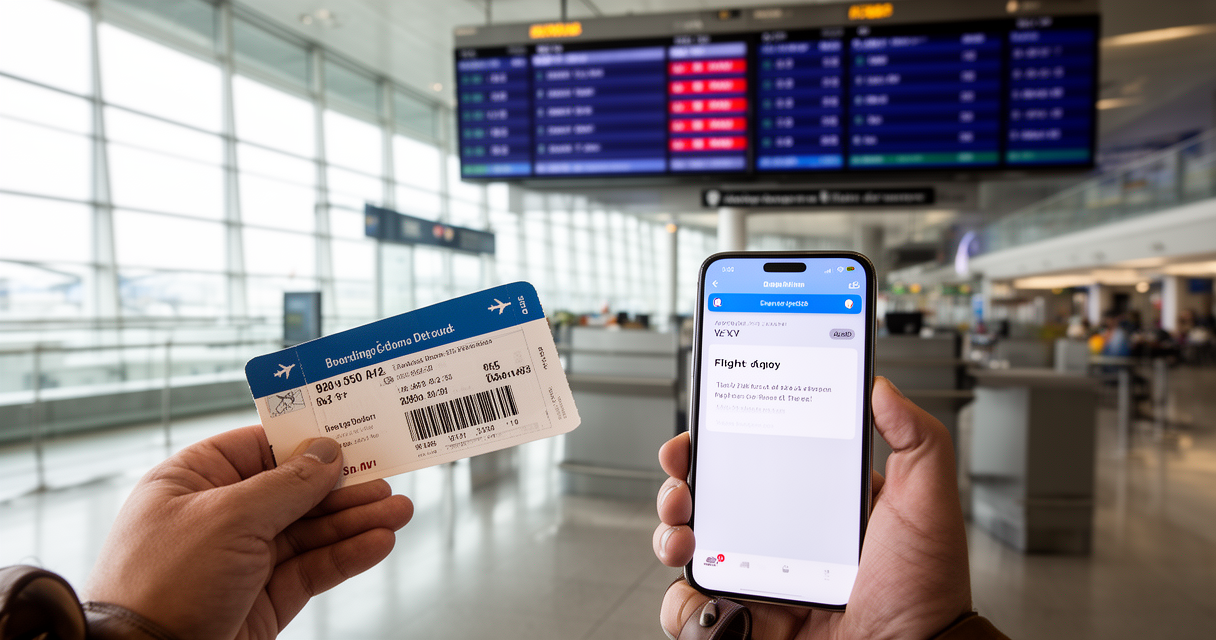
- Gather proof. Boarding pass, booking confirmation, and any record of the actual delay — a screenshot from the airline’s app, a flight-tracking record, or a receipt for meals/hotel purchased during the wait. A real-time delay tracker like Flighty keeps a timestamped record automatically, which removes the guesswork later if the airline disputes the delay length.
- File directly with the airline. Most EU and UK carriers have an EU261/UK261 claim form on their website. Submit it with the flight details, the compensation amount by tier, and the supporting documentation.
- Escalate if ignored. If the airline doesn’t respond within about 8 weeks, the next step is a national Alternative Dispute Resolution (ADR) body or aviation authority — still free, and still without giving up a percentage.
Free Claim Letter Template
The following is safe to copy, paste, and edit directly:
Subject: EU261/UK261 Compensation Claim – Flight [Flight Number], [Date]

To [Airline Name] Customer Relations,

I am writing to request compensation under [EU Regulation 261/2004 / UK261]
for flight [flight number] on [date], from [departure airport] to
[arrival airport], booking reference [reference number].

This flight [was delayed by X hours and Y minutes at arrival /
was cancelled / I was denied boarding]. Based on a flight distance
of approximately [X km/miles], I am entitled to compensation of
[€/£ amount] per passenger under Article 7 of the applicable
regulation.

[Optional: If the airline has cited a reason for the disruption,
address it here — e.g., "I understand the delay was attributed to
a technical fault. Per the European Court of Justice ruling in
Wallentin-Hermann v Alitalia (C-549/07), technical issues are
generally not considered 'extraordinary circumstances' and do not
exempt the airline from compensation obligations."]

I have attached my boarding pass, booking confirmation, and
documentation of the delay. Please process this claim and remit
payment to the following account within 14 days:

[Bank account / payment details]

If I do not receive a response within 8 weeks, I will escalate
this claim to [relevant national ADR body / aviation authority].

Regards,
[Full name]
[Contact information]
One caveat on timing: the deadline to file a claim varies by country, and it is not a uniform three years across Europe. Some illustrative figures circulate in claims-industry commentary — the UK and Ireland around six years, the Netherlands around two — but those numbers come from claims-company blogs rather than an official registry, and should be treated as rough approximations only. Travelers should confirm the current limitation period for their specific country before assuming a claim window has closed.
AirHelp vs. the Alternatives
The differences between AirHelp and its direct competitors are mostly noise — nearly all of them charge in the same range:
| Service | Standard Fee | Fee If Litigated | Notes |
|---|---|---|---|
| AirHelp | 35% | 50% | AirHelp+ subscription (about $99.99/yr, 9 trips) waives fees separately |
| AirAdvisor | About 30% | 50% | Slightly lower base rate |
| Flightright | About 35–36% | 50% | Similar structure to AirHelp |
| SkyRefund | About 35% | 50% | Comparable to AirHelp |
| ClaimCompass | — | — | Acquired by AirHelp; no longer operates independently |
The real decision isn’t which paid service to use — it’s whether to use one at all. Every player in this space lands within a few points of the same 35-to-50% range, so shopping between them saves marginal amounts compared to skipping the fee entirely.
Our Take: DIY Wins More Often Than the Marketing Suggests
For a clean, well-documented case — a clear delay length, no ambiguity about the airline’s stated cause, one flight segment — filing directly is the stronger move for most travelers. The paperwork is a form, the process takes weeks either way, and the only cost of doing it directly is the time spent filling it out.
Paying a claims company earns its keep in narrower situations: a claim the airline has already denied once and needs contesting, a multi-leg itinerary or denied-boarding dispute where liability isn’t obvious, or a traveler who genuinely knows they won’t follow up on their own for two months. AirHelp’s “AI-powered” pitch — scanning a traveler’s inbox for eligible flights and auto-filing claims — is a convenience feature, not a legal advantage. It finds eligible flights faster; it does not win a disputed case any differently than a human would by citing the same regulation and the same court ruling.
The community evidence backs this split. One traveler in r/travel documented skipping the paid-service route entirely, deciding against “one of those services that take half of the claim just to see what happens,” and recovered “EUR 1250 received in total for 5 persons… total time: 29 hours” [3]. Another commenter in r/Flights was blunt about the tradeoff: “Def directly, never any need to use a third party” [2].
Not every experience lines up that cleanly, and it’s worth naming the counterargument directly. A Google Play reviewer of the AirHelp app described going through several compensation claims over the years and concluded the fee was worth it on balance: “I’ve been using AirHelp for years, it’s my third compensation. I’ve tried going at this myself and it’s impossible, so the AH service fee is actually totally acceptable… I’d rather get a few hundred EUR with close to no effort than get nothing while actively trying” [4]. That’s a real tradeoff for travelers who know, honestly, that the claim won’t get filed otherwise — procrastination has a cost too, and AirHelp’s value proposition is built entirely around solving for it.
But the counterexamples cut the other way just as sharply. One Play Store reviewer described AirHelp taking a 35% cut — about €210 — then dropping the case partway through: “AirHelp informed me that they were withdrawing my claim. I then initiated the claim against the airline myself. The claim was eventually accepted, and the airline agreed to pay me compensation” [4]. The fee bought nothing except a delay before doing the free version anyway. Another reviewer went further: “Absolutely no reason to pay for this service… they don’t have any customers service apart from unhelpful AI” [4].
Flight delay compensation is a separate track from travel protection more broadly — it doesn’t touch trip cancellation, medical costs, or lost baggage, which is what actual travel insurance like SafetyWing or Genki covers instead. And for travelers trying to avoid delay-prone routes in the first place, comparing flight price and reliability tools before booking is a cheaper fix than any compensation claim after the fact — as are flight deal alert services that flag reliable low-fare routings before disruption becomes a factor.
Frequently Asked Questions
Is AirHelp legit?
Yes — it’s a real, established claims service operating on a no-win-no-fee model, and it has processed large volumes of EU261/UK261 claims. Legitimacy isn’t the issue; the fee structure and whether a given claim needs a third party are the actual questions worth weighing.
Can a delay caused by bad weather still get compensation?
Generally no. Weather is a recognized “extraordinary circumstance” under both EU261 and UK261, which exempts the airline from cash compensation — though the airline still owes care and assistance (meals, hotel, communication) if the delay passes roughly two hours.
What’s the difference between AirHelp and AirHelp+?
AirHelp is the free-to-join, no-win-no-fee service that takes 35% (50% if litigated) of any successful claim. AirHelp+ is a separate paid annual subscription (about $99.99/yr for nine trips) that waives those fees on claims filed through it. They are not the same product.
Do I need receipts to file a claim myself?
Proof of the delay length and flight details is required — a boarding pass, booking confirmation, and some record of arrival time (airline app screenshot, flight tracker log). Receipts for meals or hotel costs during the wait matter only if separately claiming reimbursement for care-and-assistance expenses the airline failed to cover.
How long does a direct EU261 claim usually take?
Airlines are expected to respond within about 8 weeks. Straightforward, well-documented claims are often resolved faster; disputed ones (especially “technical issue” denials) can take longer if escalation to an ADR body or national authority becomes necessary.
Is the compensation amount per passenger or per booking?
Per passenger. A family of four on a delayed long-haul flight paying the full €600 tier is collectively owed €2,400 — a detail claims companies are quick to mention because it inflates their potential commission too.
The Verdict: Do the Math Before Signing Away a Third of It
A delayed flight is worth a fixed, known amount under EU261 or UK261 — the distance and delay length decide it, not how convincing the airline’s excuse sounds. Filing directly costs nothing but time and keeps the full payout. Paying AirHelp or a competitor makes sense mainly for already-denied claims, contested multi-leg disputes, or travelers who know they won’t follow through otherwise.
Before accepting any “technical issue” denial at face value, check it against the Wallentin-Hermann standard — it’s often wrong. Then file directly first, and treat a paid claims service as the fallback, not the default.
The flight was already late. There’s no reason to pay 35% for the privilege of being compensated for it.
References
- AirHelp Price List — https://www.airhelp.com/en/price-list/
- r/Flights, “Flight claim: directly or through Airhelp?” — https://reddit.com/r/Flights/comments/1q3m0aw/flight_claim_directly_or_through_airhelp/
- r/travel, “I’ve been compensated for a delayed flight with…” — https://reddit.com/r/travel/comments/1gfnt7o/ive_been_compensated_for_a_delayed_flight_with/
- Google Play Store, AirHelp app reviews — https://play.google.com/store/apps/details?id=com.airhelp
- European Commission, EU Passenger Rights — https://europa.eu/youreurope/citizens/travel/passenger-rights/air
- UK Civil Aviation Authority, Flight Delays and Cancellations — https://www.caa.co.uk/air-passengers/travel-problems-and-rights/flight-delays-and-cancellations/delays/
- Court of Justice of the European Union, Case C-549/07 Wallentin-Hermann v Alitalia (IFTTA summary) — https://iftta.org/news/ecj-case-c-549-07-wallentin-hermann-v-alitalia/