Hopper or Google Flights — which gets you cheaper tickets?
Both apps promise cheaper flights. One delivers search. The other promises prediction. And the difference matters a lot when you’re about to spend $800 on a ticket.
Google Flights is the gold standard for finding flights quickly — best-in-class search, unbeatable calendar view, and no booking fees. Hopper is the app that tells you whether to buy now or wait, with price-freeze features and AI-driven alerts.
For most travelers, Google Flights wins. It’s faster, cleaner, and has no hidden charges at checkout. Hopper is useful if you’re planning months ahead and can tolerate the uncertainty — but its prediction accuracy is significantly less reliable than the company claims.
Here’s exactly when to use each, what Hopper’s hidden fees look like, and why you probably shouldn’t trust the 95% accuracy number. (If you’re still in the research phase and haven’t picked a specific route yet, our best AI flight price predictor apps comparison covers the broader landscape.)
What Each App Actually Does
These two tools solve different problems. That’s the key thing to understand before comparing them.
Google Flights is a flight search aggregator. It pulls data from airlines and shows you real-time prices across dates and routes. It doesn’t book directly — when you click, you go to the airline’s site or a third-party OTA. Google doesn’t take a cut of the booking, which is why it shows you unbiased results.
Hopper is a mobile booking app with a predictive layer on top. It shows you current prices AND forecasts whether they’ll go up or down. You book directly through Hopper, which is where the fee model comes in.
The distinction matters: Google Flights is a tool for finding. Hopper is a tool for timing — and booking. Conflating them leads to poor decisions.
Google Flights: What It Does Well
Google Flights is genuinely excellent at a few things no other platform matches.
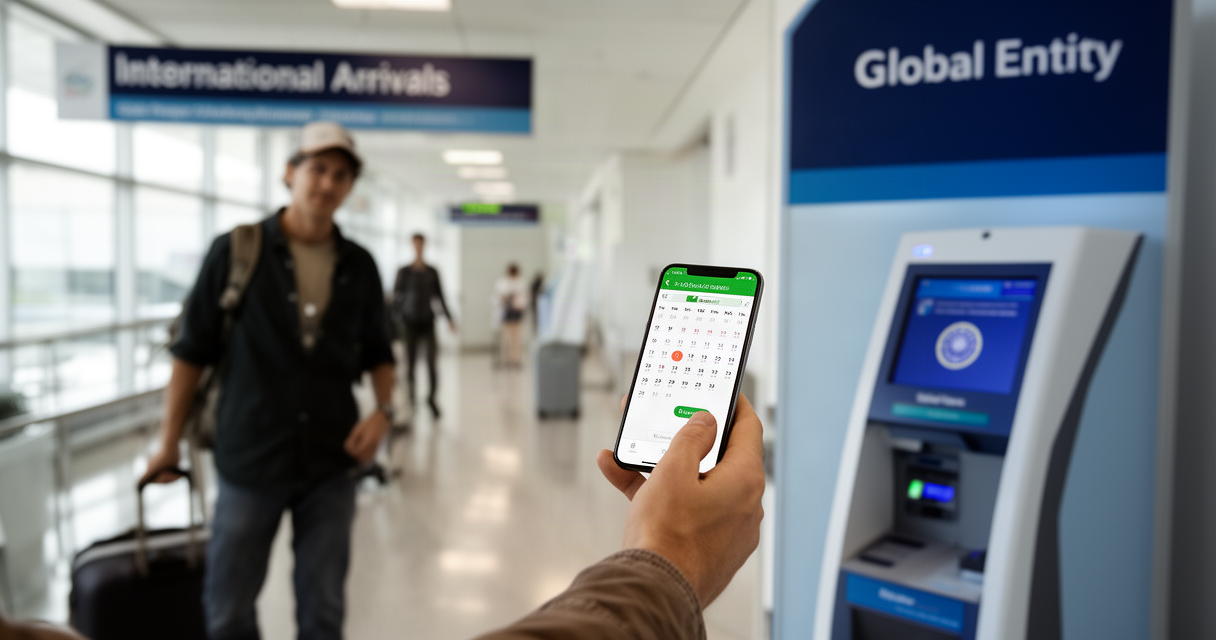
The calendar and price grid. The flexible date view lets you see every combination of departure and return dates as a color-coded grid. Want the cheapest week in April? You’ll see it at a glance. Hopper has no equivalent.
Multi-city and complex routes. Google Flights handles multi-city itineraries with ease. You can search from up to 7 origin or destination airports in one query. Try doing that on Hopper.
“Best time to book” feature. Google added a booking timing prediction based on four years of historical price data. For a specific route and date, it shows a recommended booking window. For domestic US flights, it pegs the sweet spot at 23-51 days before departure (49+ days for international). It’s not magic, but it’s based on real aggregate data.
Economy filter. In 2025, Google added the ability to exclude Basic Economy fares from results — so you only see options that include carry-on bags and seat selection. This alone saves you from the trap of booking a “cheap” fare that costs $40 more once you add a bag.
No booking fees. Google Flights doesn’t charge you anything. You click through to the airline and book there. The price you see is the price you pay.
The one thing Google Flights doesn’t do: it won’t tell you “prices are about to drop, wait three days.” That’s Hopper’s territory.
Hopper: What It Does Well (and Where It Falls Apart)
Hopper’s core value proposition is prediction. The app watches a flight you’re interested in and tells you whether to buy now or wait. It uses historical pricing data and machine learning to forecast where prices are headed.
When it works, it’s genuinely useful. Independent testing found that Hopper’s “wait” recommendations were correct about 82% of the time for bookings made 90+ days ahead, with predicted price drops landing within a few dollars of actuals.
Price Freeze. Hopper’s signature feature lets you lock in a fare for 1-14 days for a nonrefundable deposit of $1-$40. If prices go up during that window, Hopper covers the difference — up to their coverage cap. If prices drop, you pay the lower price.
In beta testing, Hopper claimed users who used Price Freeze saved an average of $80 per booking.
Now for the problems.
The 95% accuracy claim is misleading. Hopper markets its predictions as 95% accurate. Users on TripAdvisor’s Bargain Travel Forum tell a different story. One poster wrote: “I got completely screwed after it repeatedly told me to wait for a cheaper flight to Lisbon and over the following three months I had the pleasure of watching the price double.” Another user saw their watched flight’s estimated low price rise from $550 to over $800 while Hopper kept telling them to wait.
Hopper’s own terms and conditions are honest about the limitations: “our price forecasts are merely the best guess that we can provide at any given time based on existing data and past trends” and “there is no guarantee that our forecasts will be correct.”
Hidden fees at checkout. This is the part Hopper doesn’t lead with. Users consistently report a gap between the price shown and the final checkout total. One traveler found an added “Carrier Charge” of $700 added at checkout for flights to Japan. Others report service fees appearing only at the final step.
The Price Freeze coverage cap is buried: Hopper covers up to $100 per traveler if prices rise — but this limit is only visible if you click a small “i” icon. A class action lawsuit was filed specifically over this non-disclosure.
No phone support. If something goes wrong with a Hopper booking, your options are limited. There’s no phone number. Refund disputes through the app are a recurring complaint across TripAdvisor, BBB, and Trustpilot.
The Head-to-Head Comparison
| Feature | Google Flights | Hopper |
|---|---|---|
| Price comparison | Excellent — all airlines, real-time | Good — similar GDS data |
| Booking timing prediction | Yes (historical averages) | Yes (ML-based, per-route) |
| Calendar/flexible date view | Best in class | Basic |
| Multi-city / complex routes | Yes | Limited |
| Price Freeze | No | Yes ($1-40 fee) |
| Fare alerts | Yes (free) | Yes (free) |
| Hidden fees | None — books direct | Yes — service fees at checkout |
| Customer support | N/A (books via airline) | Limited (no phone) |
| Desktop experience | Excellent | Mobile-only |
| Best for | Search + discovery | Timing + price-watching |
One thing worth knowing: Hopper and Google Flights draw from the same underlying flight data (GDS and airline direct feeds). They rarely show different base fares. The difference is the prediction layer and the booking experience, not the data. If you’re chasing miles instead of cash prices, our best award flight search tools guide covers that territory separately.
Our Take: When to Use Each
The “use both” answer is technically correct but practically useless. Here’s a more direct breakdown.
Use Google Flights if:
- You’re searching across multiple dates or destinations
- You want the cheapest visible fare right now
- You’re booking on desktop
- You want to avoid any risk of checkout surprises
- Your travel window is less than 3 weeks out (predictions become unreliable this close)
Use Hopper if:
- You’re booking 2-4 months in advance and have flexibility on timing
- You’re watching one specific route and want price alerts
- You’re considering the Price Freeze for a fare you like but aren’t ready to commit
Don’t use Hopper if:
- You’re booking complex or multi-city routes
- You want to book directly with the airline
- You need reliable customer support if something goes wrong
The travelers who get burned by Hopper are usually the ones treating its predictions like facts. They’re not facts — they’re probability estimates in a volatile market. Airlines can drop flash sales, fuel costs spike, demand shifts. No prediction model handles black swans well.
Google Flights’ “best time to book” feature gives you the same directional guidance (book domestic 3-7 weeks out, international 7+ weeks out) without the risk of a wrong “wait” costing you $200.
Is Hopper’s Price Freeze Worth It?
Sometimes, yes. But you need to understand exactly what you’re buying.
You’re paying $1-40 for the right to book at today’s price within a specific window. If prices rise, Hopper covers the difference — up to $100 per traveler. If prices drop, you pay the lower price.
The freeze makes sense when: you’ve found a fare you like on a high-demand route (holiday travel, popular destinations) and need a few days to confirm plans with travel companions.
The freeze doesn’t make sense when: you’re hoping prices will drop significantly. You’re not getting $200 in protection — you’re getting $100 max. And if Hopper’s prediction is wrong and prices stay flat or drop, you’ve paid the freeze fee for nothing.
One budget traveler on Reddit put it well: “I used the Price Freeze for a Thanksgiving flight, paid $15 to freeze it, prices went up $60 the next day. Hopper covered the difference. Worth it that time. I wouldn’t use it for a $300 domestic flight with flexible dates.”
Frequently Asked Questions
Is Hopper actually cheaper than Google Flights?
Not typically. Both apps pull from the same airline data sources. Hopper doesn’t have special access to cheaper fares. The advantage of Hopper is timing (when to buy), not access to lower base prices. For finding the cheapest available fare right now, Google Flights is faster and shows results without booking fees.
How accurate are Hopper’s flight predictions?
Hopper claims 95% accuracy, but this figure is contested. Real-world performance appears closer to 82% for bookings made 90+ days in advance, and reliability drops for last-minute travel and volatile routes. Hopper’s own terms state predictions are “best guesses” with no guarantee. Treat them as useful signals, not certainties.
Does Hopper charge fees?
Yes. Hopper charges service fees at checkout that aren’t always visible upfront. Users have reported fees appearing only at the final booking step. Additionally, the Price Freeze is a nonrefundable deposit. Book directly through the airline to avoid any third-party fees.
Which is better for international flights?
Google Flights, for complex international itineraries. Its multi-origin and multi-destination search, combined with the price calendar, is far better for exploring options across regions. Hopper’s predictions are more reliable for domestic routes where pricing patterns are more stable.
Can I use both together?
Yes, and many experienced travelers do. Use Google Flights to understand the pricing landscape and find the lowest available fare. Use Hopper to track that specific route and get an alert if the price drops before you’re ready to book. Just don’t book through Hopper unless you’ve checked the final checkout total carefully.
The Verdict
Google Flights is the better tool for most travelers most of the time. It’s faster, shows unbiased results, has no checkout fees, and now offers its own booking timing guidance based on four years of data. The calendar view alone is worth using it over any alternative. Once you’ve found your flights, check our AI itinerary planner vs travel agent comparison if you’re still figuring out the rest of your trip.
Hopper earns a spot in your toolkit specifically for one job: watching a fare on a specific route when you’re planning months ahead. The Price Freeze has real value for high-demand travel dates. But go in knowing the predictions can be wrong, the fees add up at checkout, and customer support is limited.
Use Google Flights to find your flight. Use Hopper to watch it. Book through the airline whenever possible.